
Rural EB-5 · USCIS I-956F project approval on file
Investor-Owned EB-5.
Drilling a Formation That Already Produces.
of oil production on this acreage.
The minimum is $800,000 until December 31, 2026
The rural EB-5 minimum is scheduled to adjust for inflation on January 1, 2027. Our prediction is $900,000. That is not a confirmed amount: USCIS has not yet published the adjusted figure, and it may be set higher. The September 30, 2026 grandfathering date has passed; a petition filed now does not carry it.
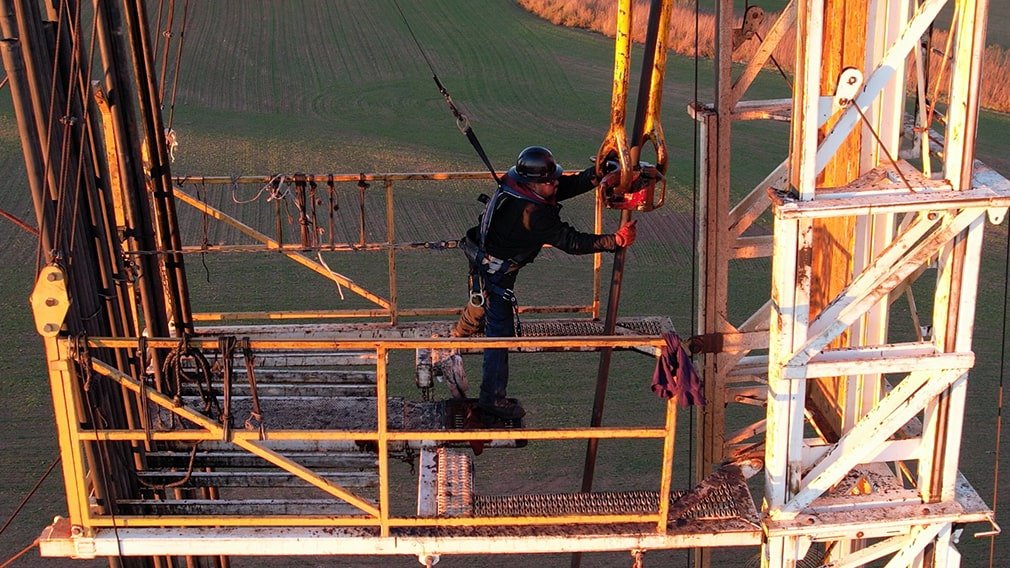
EB5 Energy is an oil company drilling eight wells in rural Oklahoma. EB-5 investors hold equity in the fund, which controls the project entity that owns the wells — an indirect ownership interest in the business and its assets, not an unsecured loan to an unrelated project.
The wells are drilled into the Mississippi Lime, placed against what nearby wells in the same formation produce today: the program projects a peak of 300 barrels a day per well, where ten modern horizontal wells three to seven miles away have peaked at an average of 483 — verifiable in Oklahoma state production records.
This investment qualifies for a green card petition.
- I-956F Project Approval
- Two Investor Petitions Approved
- Rural Priority Processing
- 3-Year Targeted Capital Repayment
Investment returns and repayment timing are targets, not guarantees. Please review the offering documents for complete terms and risks.


The reason for the investment comes first
An Approved Project, and the Jobs to Support It.
The financial structure matters. So does the underlying oil business. But for an EB-5 investor, the immigration objective is fundamental.
EB5 Energy was structured from the beginning as a rural EB-5 project, and the project received I-956F approval after USCIS reviewed its business plan, economic study and EB-5 structure.
Investors have already done this. Petitions have been filed on this project and USCIS has approved two of them — decisions on individual investors, not on the project alone.
Two investor petitions approved
USCIS has approved I-526E petitions for two EB5 Energy investors. Those are decisions on individual petitions already filed on this project — not projections of how it might be adjudicated later.
Each petition is decided on its own facts, including the investor’s source of funds. An approval for one investor is not an assurance for another.
I-956F project approval on file
The project received I-956F approval after USCIS reviewed its business plan, economic study and EB-5 structure.
Rural priority processing
Because EB5 Energy is located in a qualifying rural area, investor I-526E petitions are eligible for the priority processing provided to rural EB-5 investments.
An immigration attorney on rural priority 1:34above what the approved investor count requires
Qualifying jobs here are generated by money spent drilling and completing wells and by revenue from selling what they produce. Across the full 72-well program the economic study projects 2,232 qualifying jobs against the 1,500 that 150 investors require — computed at $72 a barrel, the price filed with USCIS.
20% rural visa set-aside
Twenty percent of annual EB-5 visas are reserved for qualifying rural investments.

Your Class Sets Your Repayment Order.
In any pooled EB-5 project an investor’s immigration outcome depends on the raise completing and the project being built, which is why prospective investors often wait to see others commit first. EB5 Energy addresses that structurally rather than by reassurance: investors join in classes of ten, in the order their I-526E petitions are filed, with a class assigned when funds are wired. Earlier classes are repaid before later classes. Qualifying jobs are allocated separately, in the order each investor’s conditional permanent resident status begins — I-485 approval, or first entry on an immigrant visa.
The eight wells now in progress are financed by EB-5 subscriptions together with private working-interest capital that is being arranged, so their drilling is not intended to wait on the EB-5 raise filling. The practical consequence is that waiting does not improve an investor’s position. It moves them behind the investors who filed first.
Class position sets repayment order. It is not a guarantee of petition approval, of a return, or of a repayment date.
Some of that risk is the investor’s own. An EB-5 investor has individual requirements — documenting the lawful source and path of investment funds, and satisfying admissibility. The project’s side is satisfying the EB-5 project requirements and creating the qualifying jobs attributed to investors, and EB5 Energy is structured to address that.
A fundamentally different EB-5 structure
Own It Like a Private Equity Investor. Qualify Like an EB-5 Investor.
A private equity investor buying into an oil and gas program takes ownership and shares in the profits. That is the position an EB5 Energy investor takes, with one difference: this structure is also built to qualify for EB-5.
In a conventional EB-5 investment, investors lend their capital to a developer who owns the project and controls its assets and cash flow. Repayment of the EB-5 loan is the developer’s obligation, on the developer’s timetable.
With EB5 Energy, the investors are the equity holders.
Investors hold equity in the fund, which controls the project entity that owns the wells. Management runs the business on their behalf, and no profits are distributed to the managing partner or the operators until every investor class has had its capital returned.
| Typical EB-5 Loan | EB5 Energy |
|---|---|
| Typical EB-5 loan:Investors lend to a developer | EB5 Energy:Investors hold equity in the fund that controls the project entity |
| Typical EB-5 loan:Developer owns the underlying project | EB5 Energy:Investors have an indirect ownership interest in the project assets |
| Typical EB-5 loan:Investor return is generally limited to interest | EB5 Energy:Investors participate in the economics of the business |
| Typical EB-5 loan:Repayment often depends on refinancing or sale | EB5 Energy:Repayment is targeted from operating cash flow |
| Typical EB-5 loan:Investment economics generally end at repayment | EB5 Energy:Economic participation can continue after capital is returned |
Count the Steps Before Repayment
In a construction-backed EB-5 loan, repayment usually waits on a sequence. The building has to be completed. It has to be leased. It has to generate stable income. Then the developer has to refinance or sell it, on terms good enough to repay the EB-5 loan. Each step depends on the one before it, and the last two depend on lending and property markets as they are years from now.
Many EB-5 real estate loans now depend on refinancing at materially higher interest rates than when they were underwritten. Repayment here is designed to come from production cash flow, so interest rates do not directly determine whether or when EB-5 capital is repaid.
An oil well is a shorter chain. A well typically reaches production about 30 days from the start of work, and no bank and no buyer has to agree to any of it.
Repayment of capital is targeted at about three years for the earliest investor classes, from production cash flow. Later classes are repaid after them, and once all EB-5 investor capital has been repaid, investors share in profits.
That is a shorter chain, not an absent one. Wells can underperform, drilling can be delayed, and the price of oil moves in both directions. The difference is the number of things that have to go right — and how many of them depend on someone else agreeing.
Investor Capital Is Repaid Before Profits Are Split
The order of distributions isn’t simply management’s intention. It is established in the company’s governing agreement.
No profits are distributed to the managing partner or the operators until every investor class has had its capital returned. While capital is outstanding, the managing partner’s only distribution is its half of the dividend remainder described below.
EB-5 investors’ entitlement is paid in two phases.
While investor capital is outstanding, the operating company pays the NCE a 9% annual dividend. After NCE operating costs, the remainder is split evenly between the managing partner and the EB-5 investors — currently estimated at 2.25% a year on the $800,000 investment.
Once all investor capital has been repaid, the fund may sell the project’s assets and distribute the proceeds, or hold the assets and distribute net cash flow. Either way, the NCE is entitled to 70% of what is distributed, and half of that, 35%, goes to EB-5 investors.
The dividend is the first phase of that share, not an addition to it.
The 35% is not a yield paid for taking more risk. It is what ownership pays: the fund is capitalised entirely with EB-5 equity, so its share of profits accrues to the investors who funded it, and the managing partner’s and operators’ profit participation comes after all investor capital is repaid.
Three figures totalling 100%. No other party shares in profits.
An investor does not buy a share of a particular well. The investment buys limited partnership interests in EB5 Energy Fund I, which controls the project entity that owns the wells — so the interest is not confined to the wells drilled first. The approved I-956F covers the company at up to 72 wells and 150 EB-5 investors, and mineral rights are secured for the first eight, which are in progress now.
What a well costs, where the acreage is, and what has already been produced from it →
Percentages are of distributed profits. The EB-5 investors’ share is paid as dividend distributions while their capital is outstanding and as profit distributions afterwards; the managing partner and operators share in profits only once all investor capital has been repaid. These are shares, not a projection of amount or timing.
That’s what alignment means in the EB5 Energy structure.
The short version
An American oil company controlled by a fund its EB-5 investors own, drilling a formation that has produced for sixty years.
Investors hold equity in the fund, which controls the project entity that owns the wells — an indirect ownership interest in the business and its assets. The wells are drilled into the Mississippi Lime and placed against what nearby wells in the same formation produce today. The project has USCIS I-956F project approval on file, and two investors who filed on it already hold approved petitions.
While investor capital is outstanding, investors are entitled to a share of the fund’s dividend, currently estimated at about 2.25% a year on the $800,000 investment, subject to available cash flow. Once all EB-5 investor capital has been repaid, EB-5 investors receive 35% of what is distributed, from a sale of the assets or from net cash flow.
The minimum is $800,000 until December 31, 2026.
Schedule a CallWhere to go from here
For educational purposes only. This is not an offer to sell or a solicitation of an offer to buy any security. EB-5 investments involve risk, including possible loss of principal, and participation does not guarantee a visa or permanent residency. Offers are made only through official offering documents to qualified investors.
I-956F project approval is approval of the project and does not determine any individual investor’s petition. Immigration timelines are estimates based on the case experience of independent counsel, not published USCIS data, and are subject to change. Return of capital is a target, not a commitment, and distributions are subject to available cash flow and the terms of the operating agreement. The 2027 investment amount is a prediction; USCIS has not yet published the adjusted figure.